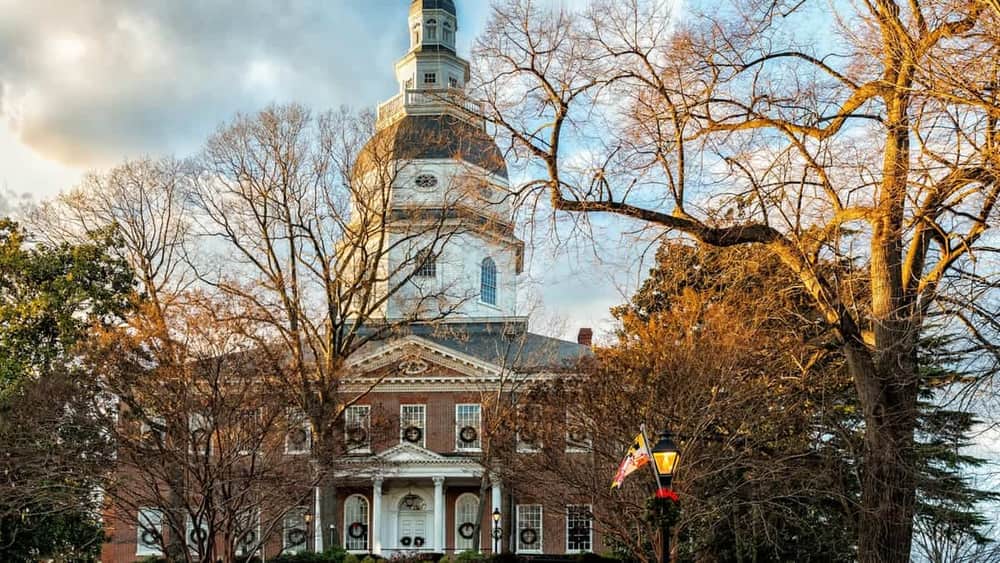
The seat of Maryland’s government is also one of the most historic buildings in the country. The Maryland State House in Annapolis is the oldest state capitol in continuous legislative use, and the General Assembly still meets there every winter.
What is the Maryland State House?
It is the state capitol building in Annapolis, where Maryland’s legislature meets. The General Assembly, with its 47 senators and 141 delegates, holds its 90-day session inside the building each year, as explained in our guide to how the Maryland General Assembly works.
How old is it?
The building dates to 1779. It was designed by Joseph Horatio Anderson, and construction began in 1772, although work was delayed by the American Revolution. That makes it older than any other state capitol still in regular legislative use.
What role did it play in the American Revolution?
The State House served as the nation’s capitol from November 1783 to August 1784. During that period, the Congress of the Confederation met in Annapolis, and in the Old Senate Chamber it ratified the Treaty of Paris on January 14, 1784. The treaty formally ended the American Revolutionary War.
What is special about the dome?
The State House is topped by a wooden dome. It is described as the largest wooden dome in the country built without nails, supported by wooden pegs. The dome is one of the features that make the building recognizable from across Annapolis.
Key facts at a glance
| Detail | Fact |
|---|---|
| Location | Annapolis, Maryland |
| Building dates to | 1779 |
| Designer | Joseph Horatio Anderson |
| Served as nation’s capitol | November 1783 to August 1784 |
| Treaty of Paris ratified | January 14, 1784 |
| Distinction | Oldest state capitol in continuous legislative use |
Visiting and seeing it
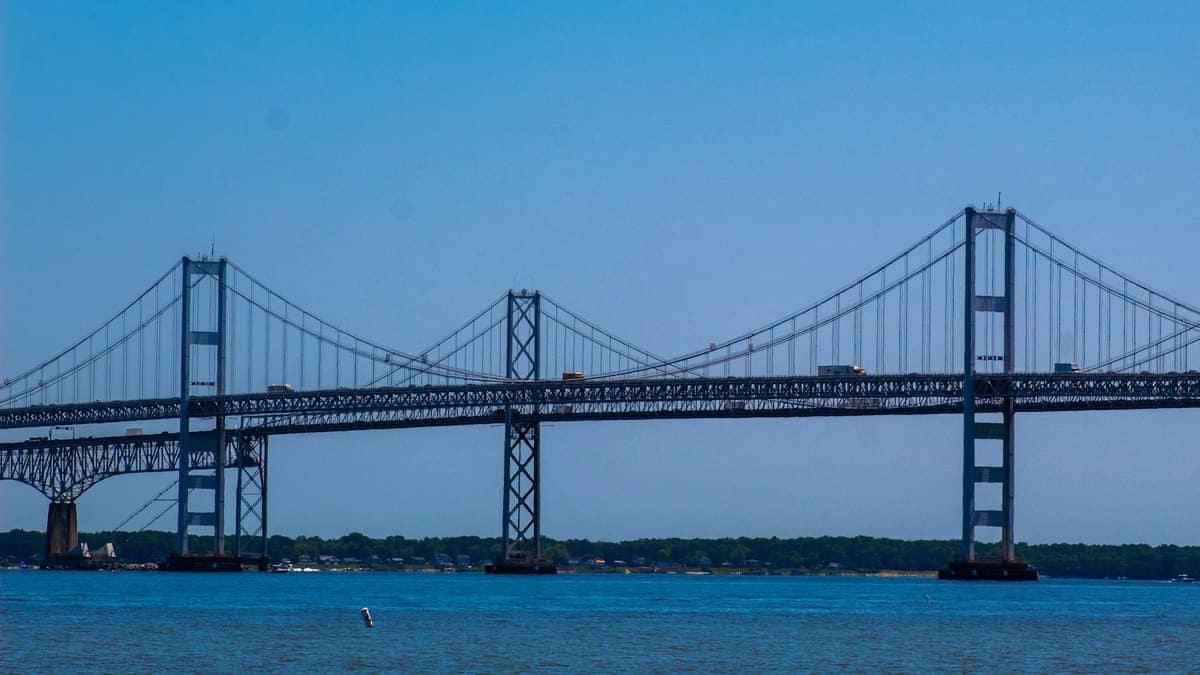
The State House is in the heart of Annapolis, a short distance from the waterfront. The same area is reached via the Chesapeake Bay Bridge from the Eastern Shore. Visiting hours and tour arrangements can change, so check with the State House before you go.
This article is a general history based on published accounts. Visiting information changes, so confirm details with the State House or the Maryland Department of General Services.
Photo: Terry Granger on Unsplash.
Sources: National Park Service; Clio; Maryland State Archives